
National Association Of Australian University College
ACADEMIC PROGRAM
Peer learning in university colleges, providing students with an unmatched edge.
NAAUC’s academic program is the pinnacle of peer learning in university colleges.
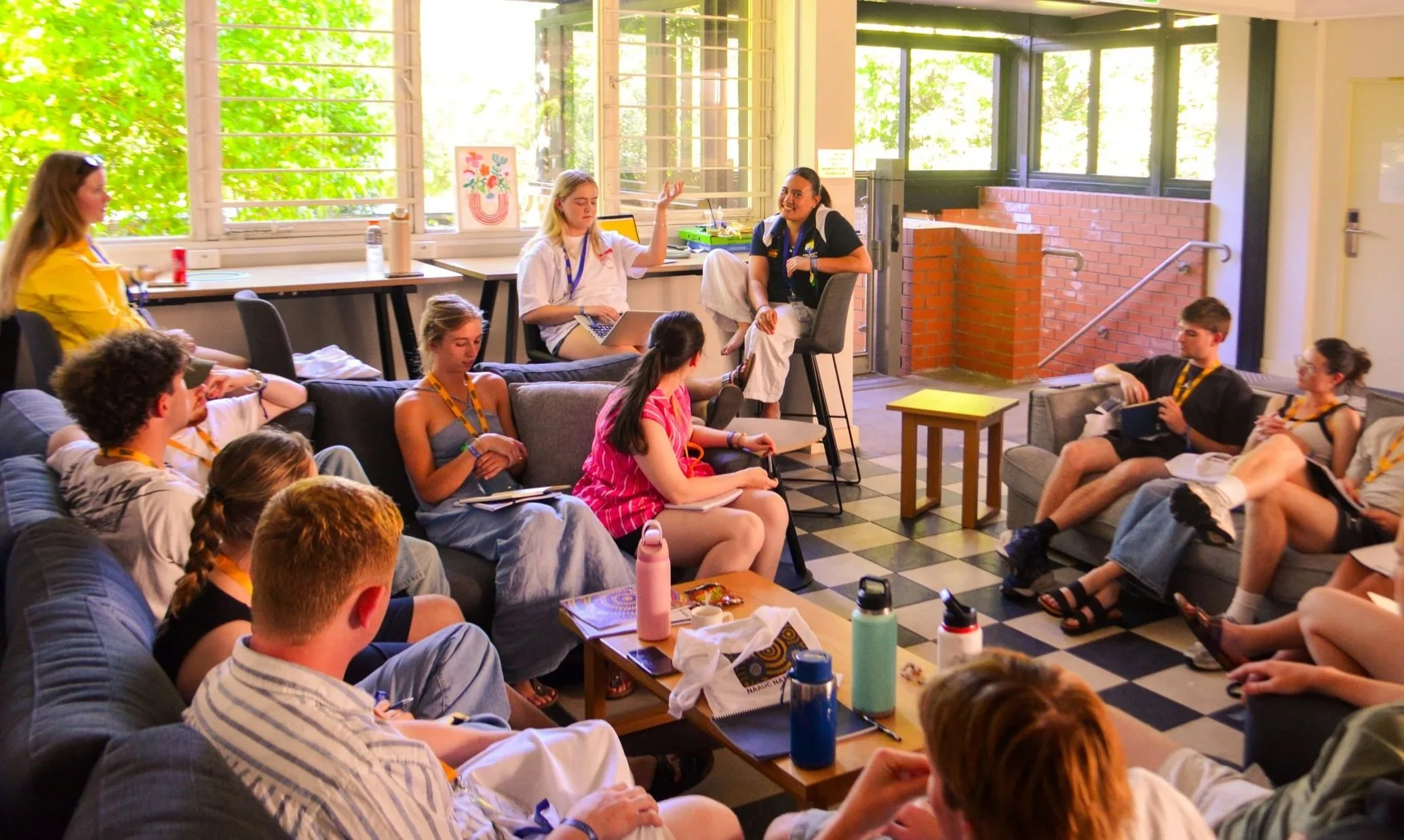
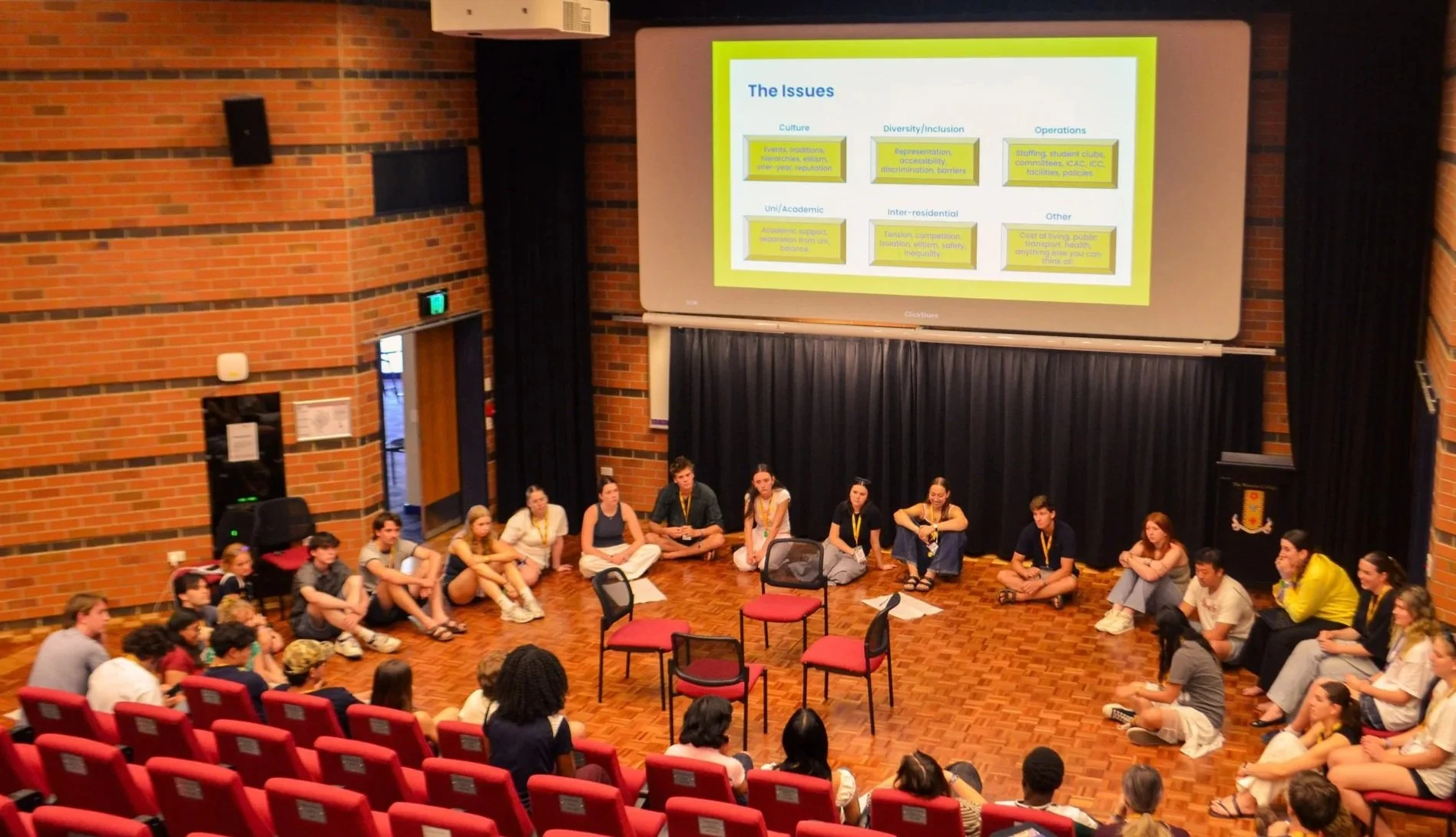
NAAUC’s academic program is integral to the Association’s offerings. It consists of seminars, guest speakers, workshops, and member-exclusive resources. An ‘academic’ is a presentation facilitated by NAAUC team members, on topics pertinent to the residential sector; an academic typically runs for one hour, and workshops run for two. Our academic program is showcased annually at our National Conference, but can also be brought to you with our NAAUC On the Road program. Depending on the setting, these academics can be tailored to you and your residence, truly making the program by students, for students.
The academic program comes to life through NAAUC’s many offerings, including the National Conference, NAAUC On The Roads, consulting, and NAAUC’s member resources.
See our full list of academic topics in the program below.
Experience NAAUC’s Academic Program!
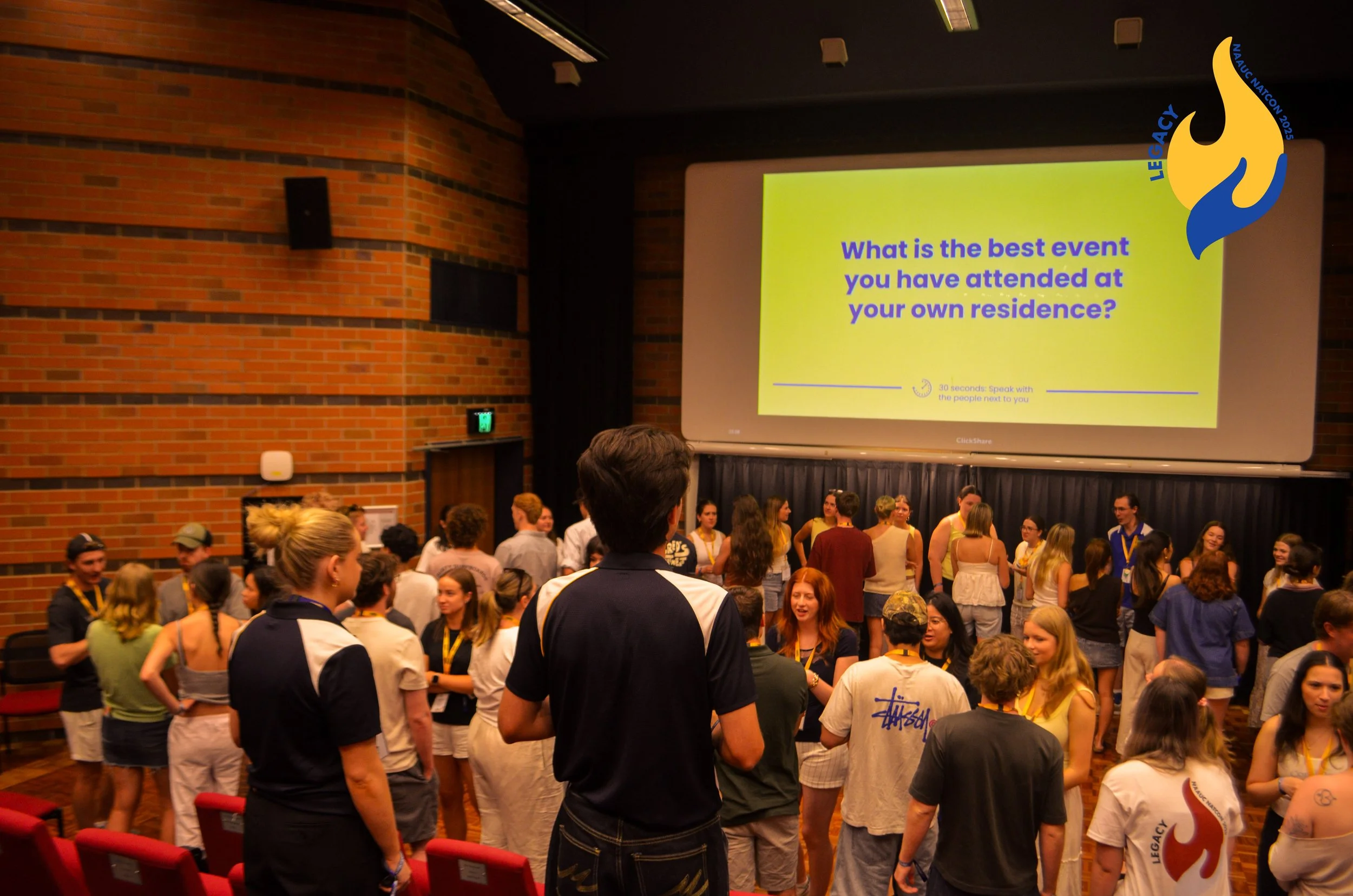
Explore NAAUC’s academic program with counterparts from across the country.
Bring NAAUC to your college and discuss a topic with your students and leaders
Check out our 2026 Academic Prospecus now!
NAT CON EXCLUSIVES
-
PROFESSIONAL DEVELOPMENT - PATHWAYS - PUBLIC PERCEPTIONS - OUTREACH
Student leadership within university residences provides far more than a memorable college experience—it offers a unique environment to build the foundations for future success. This academic explores how student leaders can transform their residential experience into meaningful personal, professional, and career opportunities through the theme of Building Your Foundation, Expanding Your Influence, and Shaping Your Future.
Using the concept of the "college bubble," delegates will be encouraged to reflect on their leadership journey and consider how the skills, relationships, and opportunities developed within their residence can extend far beyond campus life. The session begins by examining the foundations built inside the bubble: the leadership experiences, responsibilities, values, and personal strengths that shape an individual's reputation and identity as a leader. Delegates will explore the idea that every interaction contributes to their personal brand and that reputation is one of the most valuable assets they carry into future opportunities.
The academic then moves beyond the walls of college, challenging delegates to consider how they can expand their influence through professional development, networking, community engagement, and industry connections. Through practical examples and interactive reflection, participants will learn how to identify transferable skills gained through student leadership and communicate these experiences effectively in professional contexts. Particular attention will be given to building authentic networks, creating opportunities through relationships, and recognising the value of experiences that are often overlooked on resumes and in interviews.
Finally, delegates will focus on shaping their future by learning how to intentionally leverage their college experiences to support career aspirations and long-term goals. Whether pursuing graduate roles, further study, community leadership, or professional pathways, participants will explore strategies for translating leadership experiences into tangible outcomes. By "bursting the bubble," delegates will leave with a clearer understanding of how to articulate their leadership journey, strengthen their professional reputation, and confidently position themselves for opportunities beyond university.
By the conclusion of the session, delegates will recognise that student leadership is not simply a role held during university—it is the foundation upon which future careers, professional networks, and lifelong opportunities can be built.
-
COMMUNITY - COEXISTENCE - TRANSFORMATION - SHARED PURPOSE - GROWTH
The future of colleges and halls of residences across Australia is at the beginning of an evolving and changing future. The colleges of the past - catered halls in old buildings with over 100 years of history - is something that will not be created again. Newer halls of residence are being built with more modern concerts at the forefront, with newer halls with greater capacity being built to match the increasing demand for on campus living. The challenges that may arise in traditional and PBSA halls are, in some cases, very similar and also very different, and something that cannot necessarily be understood by someone not directly living in the environment.
This academic invites delegates to take a comprehensive and reflective look at the past, present and future of residential communities. As a brand new academic, the content looks to bring light to the ever-changing structures of residential communities and address the realities surrounding the longevity of Residential Colleges and Purpose Built Student Accommodation precincts and the challenges they face.
-
SAFE ENVIRONMENTS AND CULTURE - EDUCATION AND SUPPORT - BODY IMAGE AND NORMS
Diet culture is prominent across many forms of media within society, and permeates into young people’s lives, often impacting their self-image and relationship with food and exercise. For many residences, the dining hall or student kitchen plays a significant role in a student's college experience. It is often the first space students meet one another during Welcome Week, it provides a central space for various meetings and student club events and of course, is a place where most students eat and spend many hours of their day. Social media trends, norms around drinking and dining hall/kitchen culture play a role in disordered eating and a feeling of safety in their food preparation and eating environment.
Residences without dining halls or with customisable meal-plans occupy a key element of this discussion too, where diet culture still has the potential to permeate into the halls and everyday life. All of these spaces can be a high-risk environment for disordered eating and poor body image. Student leaders have the power to set the tone and culture throughout their residence, and in the dining hall is no different.
During this academic, we will unpack how the unique environment of a college influences eating habits and body image, and the factors that can create these high-risk environments. The delegates will be given a chance to explore their own college’s diet- and body-image-related culture and traditions, and evaluate how this can impact not only risk factors for disordered eating and poor body image but the wider culture of their college.
-
UNDERSTANDING AND INCLUSION - BEYOND THE BINARY - EXPLORATION OF IDENTITY
Residential colleges bring together young adults during a significant period of transition, identity development and increasing independence. Within this context, traditional college cultures and gendered expectations can strongly influence students’ sense of belonging, participation and leadership opportunities. This academic will explore the ways femininity, masculinity and gender norms can influence residential college environments.
Through reflection, discussion and consideration of lived experiences, the session will examine the effects of larger concepts such as misogyny and toxic versus positive masculinity and femininity on the residential space and how this can influence double standards and expectations in both leadership and day-to-day life. Students will consider how these dynamics may affect student relationships, leadership structures, behaviour and decision-making, as well as the barriers they can create for students whose gender expression or identity does not align with dominant expectations.
The academic aims to support student leaders to recognise and challenge harmful gender norms while promoting respectful, equitable and inclusive college communities. Students will leave with practical strategies and reflective questions to help them examine their own residence’s culture, traditions and leadership practices through a more critical gender-informed lens.
-
MENTAL WELLNESS AND HEALTH - SELF CARE AND SAFE SPACES - RISK MANAGEMENT
Mental wellbeing is fundamental to creating safe, supportive and thriving residential communities. With increasing rates of psychological distress among young Australians, residential leaders are often the first to notice when a student may be struggling. While these leaders play an important role in fostering connection and responding to concerns, they must also balance the demands of leadership with maintaining their own wellbeing to avoid burnout and compassion fatigue.
This academic explores the current state of mental wellbeing among young Australians living in university residential colleges, drawing on evidence-based mental health frameworks. Participants will develop an understanding of the difference between mental health and mental illness, examine the principles of positive psychology through a mental health framework, and learn practical strategies for creating psychologically safe communities. The session will also explore how leaders can "hold space" for others, recognise signs that someone may need support, have meaningful conversations about mental health, and confidently refer students to appropriate professional services.
Alongside supporting others, the seminar emphasises the importance of self-care in leadership. Participants will reflect on strategies for preventing burnout, establishing healthy boundaries, managing energy effectively, and developing sustainable leadership practices that enable them to continue supporting their college without compromising their own wellbeing. Through practical scenarios, interactive discussions and evidence-informed resources, attendees will leave equipped with the confidence, knowledge and tools to promote a culture of mental wellbeing and resilience within their residential communities.
-
CONSENT - SEX EDUCATION - POSITIVE CULTURE - POWER DYNAMICS - TABOOS AND STEREOTYPES
University residences continue to evolve in response to the shifting social and cultural needs of their communities. Sex culture in residential settings remains a distinct and often challenging space, where issues related to expectations, relationships, and power dynamics can increase the risk of unsafe, discriminatory, or inappropriate behaviour.
This academic aims to equip student leaders with the awareness, language, and practical tools needed to critically analyse and engage with sex culture within their colleges. Through exploring topics such as first-time narratives, the Proximity Principle, consent, and the diversity of sex education experiences (inclusive to LGBTQIA+ inclusion) delegates will develop a deeper understanding of the factors that shape their communities' culture. Toxic masculinity and femininity, the influence of pornography, and the impact of school-based sex education are also examined throughout this academic and are informed by the challenges leaders face and the influence they carry within their communities.
Delegates will participate in a range of interactive activities, including group brainstorms, and scenario-based discussions to support reflection on individual perspectives, systemic issues, and the role leaders play in shaping positive and inclusive environments. Practical strategies will also be provided to help delegates navigate power dynamics, manage relationships, support disclosures, and respond effectively in vulnerable scenarios.
This academic is relevant to a broad range of student leaders. All delegates will leave with a stronger sense of their own role in shaping sex culture, and with the skills and confidence to lead cultural change in their communities.
-
UNDERSTANDING AND INCLUSION - LGBTQIA+ - IDENTITY AND BELONGING
For many young adults entering the residential college space, moving to a new city and beginning university can be a time of exploration, independence and self-discovery. For LGBTQIA+ students, this transition also often involves navigating disclosure, finding community, exploring identity and assessing the safety and acceptance of a new community environment. Residential colleges play an important role in either strengthening or undermining students’ sense of self and belonging during this crucial period.
This academic will explore the perspectives and experiences of LGBTQIA+ students in residential college settings, including the impact of homophobia, heteronormativity and exclusionary traditions or behaviours. It will consider how student leaders can actively support queer residents through visible allyship, inclusive language, respectful practices and meaningful responses to discrimination.
In collaboration with the Gender academic, this session will also introduce the concept of intersectionality and explore how sexuality, gender and other aspects of identity interact to shape students’ experiences of leadership, safety and belonging in the residential space. The session will encourage participants to learn from diverse perspectives and consider how shared experiences can build understanding and empathy across college communities. Students will gain practical actions and reflective tools to help foster safer, more welcoming and affirming environments for LGBTQIA+ students.
NOTR EXCLUSIVES
-
ANALYSIS AND GOAL SETTING - CONNECTION OVER COMPARISON - COMMUNITY
One of the many benefits to on campus living is the strong sense of community that is gained. This experience is heightened by moving beyond the walls of your residence to create lasting connections with neighbouring communities. Inter – residential relations can be the highlight of living on campus, and this academic looks to encourage students to expand their horizons and foster strong connections across all residences. Students are given the opportunity to reflect and analyse their existing relationships across residences, both on a personal and residence basis, and through this academic, students are provided with the tools and knowledge to take their campus community to the next level.
Acknowledging the difference and variety of cross campus relations across the country, this NAAUC on the Road exclusive is tailored to suit the needs of individual residences and universities, engaging students to create strong connections and communities, regardless of the current state of relations on campus. Students are encouraged to form genuine connection, by reviewing unhealthy conflict and strained relations, to work towards tangible outcomes in their region. Positive inter residential relations make everybody’s experience living on campus a far safer, more enjoyable and more worthwhile experience. This academic looks to ensure that all attendees walk away with a clear and actionable plan as they return to their communities.
-
PERSONAL DEVELOPMENT - TEAMWORK - ACCOUNTABILITY AND RESPONSIBILITY - TOOLBOX
Leadership Logistics is a session that encourages leaders to critically analyse their role in leadership and leadership skills, both as individuals and more broadly amongst the teams within their residences. The academic will begin with leaders taking time to reflect and analyse what strong leadership looks like, drawing on their personal experiences to develop a stringer understanding of what makes a good leader. It then poses an important question to leaders; What is the reason they chose to be a leader? Leaders will then explore challenges within leadership, not just what they are, but how to avoid and grow from them, and how each individual leader is able to support themselves and each other to contribute to a strong and effective leadership team.
This session facilitates an environment in which student leaders lead their own discussions about leadership, allowing them to identify the ways in which, as individuals, each person brings something unique and valuable to the team. Students are encouraged and supported in setting meaningful goals that support self-improvement throughout their time in residential leadership positions.
-
REFLECTION AND EVALUATION -GOAL SETTING - VISION - TEAM BEHAVIOURS
Given the unique environment in which leaders both work and live, it is easy for them to lose sight of their goals, passions and vision for the year. The mid-year slump is a common challenge that leadership teams face throughout their tenure, it is easy to fall into a pattern of behaviour throughout the year, meaning leadership teams lose sight of those goals they set at the start of the year. This academic provides leaders and leadership teams the opportunity to reset and critically review the year, identifying key challenges that are inhibiting the effectiveness of the leadership team. Leaders are then empowered to consider potential solutions and ways forward and equipped with key tools to take these steps within their residences, supporting a strong finish to the year and their time in their roles.
This NOTR exclusive is perfect for mid-year bookings, Looking Back, Moving Forward is the academic to refocus the student leadership team, and get them back on track for an excellent second half of the year.for the time they have left in their role. NAAUC acknowledges the high-pressure environment in which residential student leaders operate, and this academic therefore ensures that attendees leave feeling empowered and ready to make the most of their remaining tenure. Perfect for mid-year retreats and NOTR bookings, Looking Back, Moving Forward puts student leaders back on track for a fantastic second-half of the year.
-
TEAMWORK - COHESION AND COMMUNICATION - PLANNING - CONFLICT RESOLUTION
This NOTR exclusive aims to unite student leadership teams and informs of the key elements that are required to successful operation. Regardless of who we are speaking to in your team, from Residential Advisors to O-Week leaders, Operating Effectively as a team has something for every leader. The academic explores and tackles team dynamics, common challenges, effective communication strategies and conflict resolution, providing leadership teams with the capability to grow and work together.
Supported by lived experiences and professional insights, this academic breaks down the core elements of teamwork, acknowledges that leadership, particularly within university residences, has high intensity periods throughout the year, and how each team can manage their stress and keep high cohesion through these times.
As a NOTR exclusive, this academic can be tailored to your residence and leadership team, supporting a response to team challenges or regrouping after stressful periods. Through consultation and communication with NAAUC, this session will set your team up for success, regardless of what your tenure will throw at you.
-
BALANCE AND REGULATION - BURNOUT - MENTAL WELLNESS - SETTING BOUNDARIES
It is a familiar yet important concept for student leaders that they must prioritise 'self-care' in order to avoid burnout, and this message is repeated so often that its meaning can start to feel diluted. Whilst taking time for meditation, a walk outside, or spending time with loved ones is imperative to maintaining a positive mindset for all individuals, living in your workplace is something unique to the leaders of university residences, and this reality changes what self-care actually requires. It can be difficult to set clear boundaries and separate the responsibilities of a role from genuine relaxation and off time when your bedroom, your job and your community exist under one roof.
Self-Care in Leadership aims to guide leaders to know the bounds of their roles, set clear expectations for their year, and provide practical mechanisms to put procedures in place for taking leave when needed. This NOTR exclusive reaches beyond the familar advice on this topic, and helps leaders to set tangible and achievable goals for their year, or review and reset mid - way through their year, to ensure that self - care is a workable plan, rather than a vague aspiration.
Full Academic Program
-
INCLUSIVE LIVING - AWARENESS - REPRESENTATION - EMPATHY IN ACTION
Across Australia, tertiary residences have attempted to meet the diverse needs of their students. However, the experiences of neurodivergent students and those with disabilities are often overlooked, with many living in residences built before their needs were accommodated or understood, meaning that these environments are inherently inaccessible. University residences tend to see higher rates of neurodiversity, illustrating the need for more accessible and inclusive practices. Also necessary are student leaders who support and advocate for these residents.
This academic hopes to provide a better insight into the lives and realities of neurodiverse individuals and people with disabilities, detailing what aspects of their residence and community may be impacting them. Delegates will be encouraged to critically assess practices and strategies that not only promote equity but work towards building environments suitable for everyone. The academic will equip leaders with not only knowledge and insights but also the tools and frameworks necessary, demonstrating how the culmination of small actions and accommodations can make a world of difference for neurodivergent individuals and those living with disability. With content relevant to a wide range of leadership and residential roles, it is designed to empower delegates to become active agents of change, and embrace accessibility and neurodiversity as an everyday necessity and consideration.
With a focus on reflection and actionables this academic will require leaders to review the accessibility of their own residence by looking into the following areas; sensory support, communication preferences, hidden disabilities, social inclusion, and the support structures beyond adjusting infrastructure and policy.
-
PROFESSIONAL DEVELOPMENT - PATHWAYS - PUBLIC PERCEPTIONS - OUTREACH
Student leadership within university residences provides far more than a memorable college experience—it offers a unique environment to build the foundations for future success. This academic explores how student leaders can transform their residential experience into meaningful personal, professional, and career opportunities through the theme of Building Your Foundation, Expanding Your Influence, and Shaping Your Future.
Using the concept of the "college bubble," delegates will be encouraged to reflect on their leadership journey and consider how the skills, relationships, and opportunities developed within their residence can extend far beyond campus life. The session begins by examining the foundations built inside the bubble: the leadership experiences, responsibilities, values, and personal strengths that shape an individual's reputation and identity as a leader. Delegates will explore the idea that every interaction contributes to their personal brand and that reputation is one of the most valuable assets they carry into future opportunities.
The academic then moves beyond the walls of college, challenging delegates to consider how they can expand their influence through professional development, networking, community engagement, and industry connections. Through practical examples and interactive reflection, participants will learn how to identify transferable skills gained through student leadership and communicate these experiences effectively in professional contexts. Particular attention will be given to building authentic networks, creating opportunities through relationships, and recognising the value of experiences that are often overlooked on resumes and in interviews.
Finally, delegates will focus on shaping their future by learning how to intentionally leverage their college experiences to support career aspirations and long-term goals. Whether pursuing graduate roles, further study, community leadership, or professional pathways, participants will explore strategies for translating leadership experiences into tangible outcomes. By "bursting the bubble," delegates will leave with a clearer understanding of how to articulate their leadership journey, strengthen their professional reputation, and confidently position themselves for opportunities beyond university.
By the conclusion of the session, delegates will recognise that student leadership is not simply a role held during university—it is the foundation upon which future careers, professional networks, and lifelong opportunities can be built.
-
COMMUNITY - COEXISTENCE - TRANSFORMATION - SHARED PURPOSE - GROWTH
The future of colleges and halls of residences across Australia is at the beginning of an evolving and changing future. The colleges of the past - catered halls in old buildings with over 100 years of history - is something that will not be created again. Newer halls of residence are being built with more modern concerts at the forefront, with newer halls with greater capacity being built to match the increasing demand for on campus living. The challenges that may arise in traditional and PBSA halls are, in some cases, very similar and also very different, and something that cannot necessarily be understood by someone not directly living in the environment.
This academic invites delegates to take a comprehensive and reflective look at the past, present and future of residential communities. As a brand new academic, the content looks to bring light to the ever-changing structures of residential communities and address the realities surrounding the longevity of Residential Colleges and Purpose Built Student Accommodation precincts and the challenges they face.
-
SAFE ENVIRONMENTS AND CULTURE - EDUCATION AND SUPPORT - BODY IMAGE AND NORMS
Diet culture is prominent across many forms of media within society, and permeates into young people’s lives, often impacting their self-image and relationship with food and exercise. For many residences, the dining hall or student kitchen plays a significant role in a student's college experience. It is often the first space students meet one another during Welcome Week, it provides a central space for various meetings and student club events and of course, is a place where most students eat and spend many hours of their day. Social media trends, norms around drinking and dining hall/kitchen culture play a role in disordered eating and a feeling of safety in their food preparation and eating environment.
Residences without dining halls or with customisable meal-plans occupy a key element of this discussion too, where diet culture still has the potential to permeate into the halls and everyday life. All of these spaces can be a high-risk environment for disordered eating and poor body image. Student leaders have the power to set the tone and culture throughout their residence, and in the dining hall is no different.
During this academic, we will unpack how the unique environment of a college influences eating habits and body image, and the factors that can create these high-risk environments. The delegates will be given a chance to explore their own college’s diet- and body-image-related culture and traditions, and evaluate how this can impact not only risk factors for disordered eating and poor body image but the wider culture of their college.
-
UNDERSTANDING AND INCLUSION - BEYOND THE BINARY - EXPLORATION OF IDENTITY
Residential colleges bring together young adults during a significant period of transition, identity development and increasing independence. Within this context, traditional college cultures and gendered expectations can strongly influence students’ sense of belonging, participation and leadership opportunities. This academic will explore the ways femininity, masculinity and gender norms can influence residential college environments.
Through reflection, discussion and consideration of lived experiences, the session will examine the effects of larger concepts such as misogyny and toxic versus positive masculinity and femininity on the residential space and how this can influence double standards and expectations in both leadership and day-to-day life. Students will consider how these dynamics may affect student relationships, leadership structures, behaviour and decision-making, as well as the barriers they can create for students whose gender expression or identity does not align with dominant expectations.
The academic aims to support student leaders to recognise and challenge harmful gender norms while promoting respectful, equitable and inclusive college communities. Students will leave with practical strategies and reflective questions to help them examine their own residence’s culture, traditions and leadership practices through a more critical gender-informed lens.
-
GLOBAL PERSPECTIVES - DIVERSITY AND INCLUSION - COLLABORATIVE DESIGN
International students, coming into the college environment is often the first interaction with Australian cultures. Many international students arrive without any support networks, and have to learn to adapt to Australian culture whilst simultaneously building up a new network of friends around them. The challenges that international students often have to navigate are very different to what domestic students have to consider, and, through recognising these challenges, we can create spaces that are welcoming and accepting of international students, empowering them to contribute to, and shape, college life.
This academic allows delegates to think deeply about the role that international students play in their college, and to think critically about how international students experience residential life and how that is shaped by student leaders. It acknowledges the common barriers that international students may experience, touching on points such as cultural shock, language barriers and the challenges of having a limited support network in the country. Through open discussion, college specific reflection and tangible action items, this academic challenges delegates to rethink the way they welcome, support and engage with international residents. We aim to not tell delegates what to do, but to provide a forum for discussion about what works already that can be implemented in other colleges. This academic will create a space for meaningful reflection about what inclusion is, and how it can be strengthened in our individual, unique communities.
Overall, delegates will leave this academic with new ideas about how they can ensure international students are included in their communities. These ideas will be based around the events and practices that are already in use, and as an issue facing many colleges, we can learn from each, create new ideas and move forward into accepting and inclusive communities.
-
ANALYSIS AND GOAL SETTING - CONNECTION OVER COMPARISON - COMMUNITY
One of the many benefits to on campus living is the strong sense of community that is gained. This experience is heightened by moving beyond the walls of your residence to create lasting connections with neighbouring communities. Inter – residential relations can be the highlight of living on campus, and this academic looks to encourage students to expand their horizons and foster strong connections across all residences. Students are given the opportunity to reflect and analyse their existing relationships across residences, both on a personal and residence basis, and through this academic, students are provided with the tools and knowledge to take their campus community to the next level.
Acknowledging the difference and variety of cross campus relations across the country, this NAAUC on the Road exclusive is tailored to suit the needs of individual residences and universities, engaging students to create strong connections and communities, regardless of the current state of relations on campus. Students are encouraged to form genuine connection, by reviewing unhealthy conflict and strained relations, to work towards tangible outcomes in their region. Positive inter residential relations make everybody’s experience living on campus a far safer, more enjoyable and more worthwhile experience. This academic looks to ensure that all attendees walk away with a clear and actionable plan as they return to their communities.
-
PERSONAL DEVELOPMENT - TEAMWORK - ACCOUNTABILITY AND RESPONSIBILITY - TOOLBOX
Leadership Logistics is a session that encourages leaders to critically analyse their role in leadership and leadership skills, both as individuals and more broadly amongst the teams within their residences. The academic will begin with leaders taking time to reflect and analyse what strong leadership looks like, drawing on their personal experiences to develop a stringer understanding of what makes a good leader. It then poses an important question to leaders; What is the reason they chose to be a leader? Leaders will then explore challenges within leadership, not just what they are, but how to avoid and grow from them, and how each individual leader is able to support themselves and each other to contribute to a strong and effective leadership team.
This session facilitates an environment in which student leaders lead their own discussions about leadership, allowing them to identify the ways in which, as individuals, each person brings something unique and valuable to the team. Students are encouraged and supported in setting meaningful goals that support self-improvement throughout their time in residential leadership positions
-
REFLECTION AND EVALUATION -GOAL SETTING - VISION - TEAM BEHAVIOURS
Given the unique environment in which leaders both work and live, it is easy for them to lose sight of their goals, passions and vision for the year. The mid-year slump is a common challenge that leadership teams face throughout their tenure, it is easy to fall into a pattern of behaviour throughout the year, meaning leadership teams lose sight of those goals they set at the start of the year. This academic provides leaders and leadership teams the opportunity to reset and critically review the year, identifying key challenges that are inhibiting the effectiveness of the leadership team. Leaders are then empowered to consider potential solutions and ways forward and equipped with key tools to take these steps within their residences, supporting a strong finish to the year and their time in their roles.
This NOTR exclusive is perfect for mid-year bookings, Looking Back, Moving Forward is the academic to refocus the student leadership team, and get them back on track for an excellent second half of the year.
-
MENTAL WELLNESS AND HEALTH - SELF CARE AND SAFE SPACES - RISK MANAGEMENT
Mental wellbeing is fundamental to creating safe, supportive and thriving residential communities. With increasing rates of psychological distress among young Australians, residential leaders are often the first to notice when a student may be struggling. While these leaders play an important role in fostering connection and responding to concerns, they must also balance the demands of leadership with maintaining their own wellbeing to avoid burnout and compassion fatigue.
This academic explores the current state of mental wellbeing among young Australians living in university residential colleges, drawing on evidence-based mental health frameworks. Participants will develop an understanding of the difference between mental health and mental illness, examine the principles of positive psychology through a mental health framework, and learn practical strategies for creating psychologically safe communities. The session will also explore how leaders can "hold space" for others, recognise signs that someone may need support, have meaningful conversations about mental health, and confidently refer students to appropriate professional services.
Alongside supporting others, the seminar emphasises the importance of self-care in leadership. Participants will reflect on strategies for preventing burnout, establishing healthy boundaries, managing energy effectively, and developing sustainable leadership practices that enable them to continue supporting their college without compromising their own wellbeing. Through practical scenarios, interactive discussions and evidence-informed resources, attendees will leave equipped with the confidence, knowledge and tools to promote a culture of mental wellbeing and resilience within their residential communities.
-
TEAMWORK - COHESION AND COMMUNICATION - PLANNING - CONFLICT RESOLUTION
This NOTR exclusive aims to unite student leadership teams and informs of the key elements that are required to successful operation. Regardless of who we are speaking to in your team, from Residential Advisors to O-Week leaders, Operating Effectively as a team has something for every leader. The academic explores and tackles team dynamics, common challenges, effective communication strategies and conflict resolution, providing leadership teams with the capability to grow and work together.
Supported by lived experiences and professional insights, this academic breaks down the core elements of teamwork, acknowledges that leadership, particularly within university residences, has high intensity periods throughout the year, and how each team can manage their stress and keep high cohesion through these times.
As a NOTR exclusive, this academic can be tailored to your residence and leadership team, supporting a response to team challenges or regrouping after stressful periods. Through consultation and communication with NAAUC, this session will set your team up for success, regardless of what your tenure will throw at you.
-
PASTORAL CARE - SUPPORT - PREPARATION AND PRESENCE - UNDERSTANDING - BOUNDARIES
This session provides a unique developmental space for student leaders in pastoral care roles to gain a deeper understanding of their upcoming role and intrinsically reflect on how it will reshape their college experience. Student RA roles within college constantly feel like balancing on a tight rope between staff professionalism holding a duty of care and embodying a genuine, approachable student leader. This comes alongside the challenging distinction of when you are on or off duty when you work where you live. This session aims to embrace all sides of an RA’s reality, often being the first point of call for students during crisis, it places student leaders in a uniquely powerful position that we hope to equip them for.
Not to spoil the fun, but the RA reality is an every changing world of pedantic requests and potential emergencies. The nurturing, adaptive, and problem solving skills gained during one's tenure as an RA stays with leaders into their futures. However the serious incidents and situations faced can present a threat to wellbeing if not properly handled. By understanding the realities & how to manage stressful environments, this seminar will show future leaders how the role will shape them positively forever.
This seminar will provide a space for incoming leaders to ask the uncomfortable questions of managing student wellbeing as a student themselves. Whilst this session provides useful information about how to be a supportive leader to others the emphasis will be on managing the leaders themselves through self care, boundaries & protecting ones space. The intention is to provide RA’s with a diverse toolkit that makes them the leader their community needs by prioritising intrinsic wellbeing.
-
CONSENT AND COMMUNICATION - SAFETY - REPORTING - VULNERABLE RELATIONS - BEHAVIOUR
Respectful Relationships on Res invites student leaders to engage in an exploration of what healthy, respectful connections look like in residential communities. Discussing the definition of a respectful relationship, kinds of relationships in residential communities, and the fundamentals of navigating these relationships. This academic addresses the diversity that exists within residential communities, highlighting that although this can lead to meaningful friendships and personal growth, it can additionally expose tensions, misunderstandings and harmful dynamics.
As residential community leaders, we have the power to shape the community and environment of the college. This power comes with the responsibility to encourage self-awareness and facilitate difficult conversations between residents to ensure our communities have strong foundations in accountability, empathy and care. Navigating these relationships as a student leader means being able to create a respectful and embracing environment that allows residents to grow and learn. It is important to acknowledge that whilst endorsing respectful communities to foster, domestic violence and gender-based violence can still occur. Being in a leadership position within these communities means recognising the signs and actively working to ensure your community is safe for everyone.
This academic focuses on what it means to live respectfully in a shared college environment. By responding to the urgent and ongoing conversation in our society around gender based violence and intimate partner violence, we can dissect how these issues surface in college environments. Through exploring what makes a healthy and respectful shared community and showcasing the different values, beliefs and expectations residents bring with them, delegates will be encouraged to reflect on their own role in shaping culture and how they can lead with empathy, curiosity and care. From here, the academic will then narrow down on the more serious topic of gender based violence within a college environment. Gender based violence in these settings can be complex and hard to address with it being shaped by power imbalances, blurred boundaries and limited access to confidential support. It is a confronting reality, but through having these difficult conversations we aim to show delegates how they can support others, not as experts, but as compassionate and informed members of their communities.
-
GOVERNANCE - COMPLIANCE - PROCESSES AND PROCEDURES - TAX OBLIGATIONS
For many students, taking on an office bearer role within their student club or relevant association marks their first time encountering and understanding formal regulations and legal responsibilities. While this will often be unfamiliar territory, it is a very normal experience for students to feel uncertain with what they are facing and the challenges that lie ahead. This academic, a centrepiece to our academic program and one that is well regarded year on year, aims to provide students with this knowledge, so the task before them feels just a little less daunting.
Office bearers have the important responsibility of ensuring their association is operating with full compliance with the law and upholding all internal processes. In this academic, delegates are able to build a foundational understanding of the general duties that come with holding an office bearer position, as well as all relevant legislation and regulations that underpin these responsibilities. We will provide specific details associated with each officer bearer role and how each position works and complements each other. Further, practical guidance will be provided by office bearers with experience within these associations, providing opportunities for delegates to further their knowledge. This academic will ensure all delegates carry out their responsibilities effectively and efficiently, ensuring their club's operations remain lawful and well-managed.
-
BALANCE AND REGULATION - BURNOUT - MENTAL WELLNESS - SETTING BOUNDARIES
It is a familiar yet important concept for student leaders that they must prioritise 'self-care' in order to avoid burnout, and this message is repeated so often that its meaning can start to feel diluted. Whilst taking time for meditation, a walk outside, or spending time with loved ones is imperative to maintaining a positive mindset for all individuals, living in your workplace is something unique to the leaders of university residences, and this reality changes what self-care actually requires. It can be difficult to set clear boundaries and separate the responsibilities of a role from genuine relaxation and off time when your bedroom, your job and your community exist under one roof.
Self-Care in Leadership aims to guide leaders to know the bounds of their roles, set clear expectations for their year, and provide practical mechanisms to put procedures in place for taking leave when needed. This NOTR exclusive reaches beyond the familar advice on this topic, and helps leaders to set tangible and achievable goals for their year, or review and reset mid - way through their year, to ensure that self - care is a workable plan, rather than a vague aspiration.
-
CONSENT - SEX EDUCATION - POSITIVE CULTURE - POWER DYNAMICS - TABOOS AND STEREOTYPES
University residences continue to evolve in response to the shifting social and cultural needs of their communities. Sex culture in residential settings remains a distinct and often challenging space, where issues related to expectations, relationships, and power dynamics can increase the risk of unsafe, discriminatory, or inappropriate behaviour.
This academic aims to equip student leaders with the awareness, language, and practical tools needed to critically analyse and engage with sex culture within their colleges. Through exploring topics such as first-time narratives, the Proximity Principle, consent, and the diversity of sex education experiences (inclusive to LGBTQIA+ inclusion) delegates will develop a deeper understanding of the factors that shape their communities' culture. Toxic masculinity and femininity, the influence of pornography, and the impact of school-based sex education are also examined throughout this academic and are informed by the challenges leaders face and the influence they carry within their communities.
Delegates will participate in a range of interactive activities, including group brainstorms, and scenario-based discussions to support reflection on individual perspectives, systemic issues, and the role leaders play in shaping positive and inclusive environments. Practical strategies will also be provided to help delegates navigate power dynamics, manage relationships, support disclosures, and respond effectively in vulnerable scenarios.
This academic is relevant to a broad range of student leaders. All delegates will leave with a stronger sense of their own role in shaping sex culture, and with the skills and confidence to lead cultural change in their communities.
-
UNDERSTANDING AND INCLUSION - LGBTQIA+ - IDENTITY AND BELONGING
For many young adults entering the residential college space, moving to a new city and beginning university can be a time of exploration, independence and self-discovery. For LGBTQIA+ students, this transition also often involves navigating disclosure, finding community, exploring identity and assessing the safety and acceptance of a new community environment. Residential colleges play an important role in either strengthening or undermining students’ sense of self and belonging during this crucial period.
This academic will explore the perspectives and experiences of LGBTQIA+ students in residential college settings, including the impact of homophobia, heteronormativity and exclusionary traditions or behaviours. It will consider how student leaders can actively support queer residents through visible allyship, inclusive language, respectful practices and meaningful responses to discrimination.
In collaboration with the Gender academic, this session will also introduce the concept of intersectionality and explore how sexuality, gender and other aspects of identity interact to shape students’ experiences of leadership, safety and belonging in the residential space. The session will encourage participants to learn from diverse perspectives and consider how shared experiences can build understanding and empathy across college communities. Students will gain practical actions and reflective tools to help foster safer, more welcoming and affirming environments for LGBTQIA+ students.
-
HANDOVER - LONG TERM PLANNING - INFORMATION - GOAL SETTING
Intentional leadership is key to creating lasting impact in residential communities. With short leadership terms, high turnover and the burnout that often comes at the end of a role, it can be difficult to maintain momentum and ensure a smooth transition between teams. As a result, handovers are often rushed or incomplete, leaving incoming leaders without the knowledge or direction they need.
This seminar focuses on how leaders can approach their role with intention by developing clear, achievable strategic plans that respond to the needs of their community. Using practical frameworks drawn from education and industry, participants will explore goal-setting, stakeholder engagement and sustainable leadership practices. The session will also provide guidance on creating effective handovers that support continuity, preserve knowledge and set future leaders up for success.
Whether you are beginning your leadership journey or preparing to hand over your role, this session encourages you to lead with purpose and leave a meaningful legacy.
-
EVALUATION - REVIEWAL AND RENEWAL - CHALLENGING PERSEPCTIVES - CREATING CULTURE AND VALUE
Residential culture defines the student experience, shaping connection, identity and belonging with collegiate communities. Whilst the sector has experienced significant progress and growth in promoting inclusivity, safer environments, the transient nature of student leadership means cultural renewal and creation must remain ongoing and intentional. This academic challenges delegates to evaluate the traditions, behaviours and structures embedded in their communities through critical reflection, discussion and practical frameworks for change. By encouraging student leaders to “take off the rose-tinted glasses” and interrogate the role of culture in residential life, we explore both the positive and harmful effects of the culture built over time or for some communities, the lack of.
Not only does this academic encourage consistent assessment of the student experience, but delegates are empowered to actively create and engage in new traditions for their residents. Through this two tiered workshop, we first explore what traditions and cultures are, before we enter a secondary phase that fosters creativity, encouraging year to year renewal and understanding how new traditions can be successfully introduced and sustained.
Delegates are equipped with the tools to critically assess existing practices, engage meaningfully in cultural renewal and confidently introduce new traditions that promote safety, connection, diversity to the academic year and long-term sustainability. Recognising that generating extensive cultural building is complex and can be met with resistance, the academic emphasises collaborative leadership and continuous evaluation as essential components of healthy residential communities. Ultimately, we hope to empower student leaders to create cultures that not only preserve community spirit and belonging, but ensure that residential life benefits everyone who experiences it.
-
PLANNING - RISK ASSESSMENT AND MANAGEMENT - EVALUATION - PRACTICAL SKILLS
Events in university residences across Australia have long been a defining part of the residential experience, creating opportunities for students to build friendships, challenge themselves, and form lasting memories. For many students, organising an event may be their first time taking on significant responsibility, while for more experienced organisers each event becomes an opportunity to further develop leadership, planning, and management skills.
This academic session will guide participants through the full event planning process, from initial brainstorming and defining clear goals to developing a detailed plan that considers the pre-event, during-event, and post-event stages. A key focus of the session will be designing events that are inclusive and accessible, ensuring that all members of the residential community can participate and feel welcome. Attendees will also learn essential practical skills such as conducting risk assessments, adhering to relevant policies and regulations, and creating contingency plans to support the safety and success of their events.
Delegates will have the opportunity to apply these concepts directly by developing an event idea they hope to implement in 2026. With guidance from NAAUC team members, participants will refine their plans to suit their college’s specific needs and context. The session will also include the opportunity for delegates to pitch their event concepts, gaining feedback and building confidence in presenting and advocating for their ideas.
Ultimately, this workshop aims to equip students with practical tools, frameworks, and a college-tailored plan to deliver meaningful, safe, and accessible events that strengthen residential communities. By the end of the session, delegates will not only be inspired to create impactful events, but will also have the skills and confidence to bring those ideas to life.
-
ACCESSIBILITY - TEAM DYNAMICS - HAZING - TRADITIONS - CHALLENGES
This session provides a comprehensive framework for student leaders to understand the true purpose of Welcome Week as a foundational period for setting culture and building lasting traditions. We will explore the diverse ways different residences approach their programming and provide a concrete outline for planning a successful week, emphasizing the necessity of planning together to share ideas and create a cohesive experience.
Participants will dive into the logistics of smart scheduling and critical considerations to ensure every student feels included from day one. Central to this discussion is the role of the Welcome Week leader. We will define the boundaries of what a leader is and isn’t, including the use of power and the clear distinction between positive traditions and harmful hazing.
By focusing on team dynamics and effective conflict management, leaders will learn how to navigate the high-pressure environment of the annual kickoff. Ultimately, this session highlights the immense influence of student leadership in seizing Welcome Week opportunities to drive engagement, support retention, and establish a vibrant residential community.
-
CRISIS CONTROL - ACCOUNTABILITY - TRANSPARENT LEADERSHIP - TEAM RECOVERY - RESILIENCE
Mistakes during your time as a leader aren’t just a possibility but a guarantee. When in an environment where you live, socialise and work with the same people everyday, even small missteps can escalate quickly and are shaped not just by what happened but also by how it was perceived by different people around res.
“What to do When You F*ck Up” takes students through the crucial aspects of handling mistakes effectively as leaders in residential settings. With a focus on self-reflection and teamwork, the session includes types of mistakes, how to avoid them, and how to deal with them effectively when they cannot be escaped. It is important that leaders, whether at an executive or pastoral care level, feel prepared to handle these situations with confidence, resilience and compassion.
This session explores the different standards that leaders are held to and how it shapes both the expectations placed on them and the way mistakes are perceived and responded to. With this in mind, the focus shifts from simply reacting to mistakes, to actively planning for them, pre-empting risks and minimising controllable errors before they occur.We will discuss strategies for acknowledging and owning mistakes, learning and adapting from errors, communicating proactively, and seeking support. Potential scenarios will be provided to illustrate how to respond to various situations that might arise during your leadership tenure. We'll also focus on minimising the chances of making mistakes and managing controllable errors. The session will address handling team members who might get upset and understanding the scale of your mistake, whether short-term or long-term. You'll gain practical ways to overcome mistakes and reassurance that making errors is part of being a leader. Attendees will have the opportunity to share their own experiences with mistakes, fostering a supportive and learning-focused environment.
-
PROFESSIONALISM - TRUST BUILDING - SHARED PURPOSE AND GOALS - RESPECT
Residential Staff have long been a key part of university life in Australia, playing a key role in support, guidance and facilitation within communities. As with all professional relationships, a strong and healthy dynamic supports our communities, and is undeniably helped through both open communication and mutual respect between these staff members and students.
This academic aims to equip student leaders with the tools to build and maintain relationships with their staff and to help them navigate any challenges that arise through these many interactions. Through developing a clear understanding of how to engage with staff effectively and professionally, delegates should feel confident and empowered in their ability to create collaborative and open environments within their residences.
Further, communication between students and staff often goes beyond an individual level, with leaders often the key connection between the broader student body and staff. Delegates will explore how to effectively advocate not just for themselves but for the community as a whole, particularly where issues have significantly escalated or there is clear discontent within the community at large. Delegates will leave feeling ready to have the discussions that need to be had, even when it isn’t easy.
Recognising that student leadership takes many different forms within university residences, this academic draws from a variety of perspectives and positions within residences, supporting all student leaders.